HUMIRA Treatment

In the 1970’s, a significant medical discovery was made with the creation of monoclonal antibodies that led to the development of a variety of new therapies and medicines, such as Adalimumab, more commonly known as HUMIRA. Monoclonal antibodies are a rapidly multiplying clone of a single B cell that responds to a single antigen. The specificity of the antibody to bind to a particular antigen has allowed for the treatment of a variety of illnesses ranging from autoimmune diseases to some types of cancers. They have also been used to treat patients who have undergone a transplant, to ensure that the transplanted organ does not get rejected. One of the drugs that was developed in response to this discovery is HUMIRA. HUMIRA is an injectable drug that is designed to treat a variety of autoimmune diseases, such as different forms of arthritis, Crohn’s disease, and ankylosing spondylitis. It can also be used to treat plaque psoriasis and ulcerative colitis, though it appears that it is used less often with these diseases. Though I’ve had some experience with HUMIRA since my mom has been using it for the past couple of years to treat her rheumatoid arthritis, I never understood how it worked and I was excited to learn more.

HUMIRA works by blocking the tumor necrosis factor (TNF) which is a cytokine that plays a role in initiating inflammation. In individuals with rheumatoid arthritis or Crohn’s disease, uncontrolled high levels of TNF result in repeated inflammation that can cause pain, fever, and joint and intestinal damage. However, when HUMIRA is taken the drug releases a protein, or antibody, that binds to the TNF and prevents it from creating an inflammatory response. TNF is an important part of our immune system since it plays a role in our innate immune response through macrophages and natural killer cells and the adaptive immune response through T cells (Anderson et al.). Though this drug has improved the lives of many individuals it can also pose certain risk to its patients. The various side effects include:

As evidenced by the long list, the possible side effects range from mild to severe. Some side-effects are specific to the way the medicine is administered, such as “pain at the site of injection” since the treatment involves the use of a needle to inject the medicine. Other symptoms such as “upper respiratory infections” or “hepatitis B infections” are reflective of the drugs immunosuppressant properties. Though acting as a TNF blocker is a necessary component of treatment, this also reduces the patient’s immune response to other harmful pathogens and the person is more susceptible to developing bacterial, viral, and fungal diseases. Once a person is infected, the disease can be much more serious, than in a person who is not immunocompromised.

For this reason, individuals who have tested positive for tuberculosis (TB), or another serious infection, have to be monitored by a health professional and treated for that disease before starting HUMIRA treatment. Years ago, my mom tested positive for TB after being exposed to the disease as a child. Before she was able to start HUMIRA treatment, she received antibiotics for about 8 months to kill the bacteria. This was done to make sure that she had fought off the pathogen before starting a drug that would alter her immune response. Since HUMIRA suppresses inflammation, it directly impacts the bodies’ innate immune response, in both a positive and negative way. It suppresses TNF resulting in less inflammation and damage, however this also suppresses the overall immune system and it is no longer able to respond to and fight off diseases as well as it used to.

Though they are tied with some risk, I’m grateful that monoclonal antibody treatments exist and can help people like my mom manage otherwise debilitating conditions. In addition, these treatments are constantly evolving and are made more comfortable for patient use. I for one, know that my mom is grateful for the newly improved HUMIRA injection that is much less painful! Hoping for more improvements in the future.

References

Anderson, Denise, et al. Nester’s Microbiology: A Human Perspective. 9th Editio, McGraw-Hill Education, 2018.

Centers for Disease Control and Prevention. Principles of Vaccination. 2019, https://www.cdc.gov/vaccines/pubs/pinkbook/prinvac.html.

Food and Drug Administration. Humira Medication Guide. 2013, https://www.fda.gov/media/73491/download.

HUMIRA® (Adalimumab). https://www.humira.com/. Accessed 18 Apr. 2020.

Ogbru, Omudhome. Adalimumab (Humira). https://www.medicinenet.com/adalimumab/article.htm. Accessed 18 Apr. 2020.
Antibody Response

As Covid-19 cases grow in the United States, many researchers and health care professionals are looking for the right treatment. Luckily, our bodies are also working hard to fight the infection by producing antibodies such as IgM and IgG. The amount of IgM vs. IgG antibodies present in our blood can tell health care workers whether we have been infected and for how long. When only IgM antibody titers are present in your blood, this means that you have only recently been infected with Covid-19 and have not yet created a better antibody response. This can be explained by the fact that IgM antibodies are the first antibodies that are created. Based on Dr. Cramer’s lecture, after about 5 days after your initial exposure to Covid-19 your antibodies will undergo class switching and you will start to create IgG antibodies. These antibodies are better equipped at tackling the virus and you will have a more pronounced immune response. At first, you will have a combination of IgM and IgG antibodies, but over time you will mostly generate IgG antibodies.

If we could determine who has produced a Covid-19 IgG response, we would be able to identify the individuals who have developed a better antibody response against the disease. These individuals would primarily have an IgG antibody titer, suggesting that multiple days have passed since the infection happened and their body has been working to fight the pathogen. This in turn builds their immunity and they are no longer infectious. This could have important clinical implications, since we would be better able to protect those who have not built up immunity. At the moment, scientists believe that individuals who have been infected and recovered from Covid-19 will have up to 2 years of immunity, but it is unclear whether this will last longer. Though this may seem like a rather short time period, any secondary exposure to Covid-19 would most likely result in a less severe infection, due to the memory cells developed by the initial immune response.

Antibody tests are being used around the world to help determine whether an individual has been infected with Covid-19 and what kind of immunity they have started to build. Health care professionals are also considering using the antibodies of individuals who have survived Covid-19 to help treat infected patients. Though this is not a widely used practice, this method has seen some preliminary success. Unfortunately, it is not without risk and the donor’s blood has to undergo a rigorous screening process to make sure that it is safe and free of other diseases. In addition, the donor would have to exhibit an appropriate and strong enough immune response, in order for the treatment to be worthwhile. Researchers are currently working on completing a nationwide study to assess the effectiveness of Covid-19 antibody treatments in the United States, so hopefully we will see more success in the future. I was surprised to learn that this is not a novel practice, rather it has been used to in the past as a way to save soldiers battling viral diseases. This makes me think that this method may be a promising approach, while scientists work to develop a vaccine. Interestingly, the antibody response to Covid-19 is also being used in the development of the Covid-19 vaccine, to make sure that a proper immune response is generated, highlighting how important antibodies are in helping us find a cure. Luckily, we are getting closer each and every day!  

References

Le Page, Michael. “How Does Coronavirus Testing Work and Will We Have a Home Test Soon?” New Scientist, 25 Mar. 2020, https://www.newscientist.com/article/2238477-how-does-coronavirus-testing-work-and-will-we-have-a-home-test-soon/.

Mandavilli, Apoorva. “Can You Become Immune to the Coronavirus?” The New York Times, 25 Mar. 2020, https://www.nytimes.com/2020/03/25/health/coronavirus-immunity-antibodies.html?searchResultPosition=2.

The Associated Press. “Coronavirus Survivor: ‘In My Blood, There May Be Answers.’” The New York Times, 3 Apr. 2020, https://www.nytimes.com/aponline/2020/04/03/us/ap-virus-outbreak-blood-from-the-recovered.html?searchResultPosition=8.

T-Cell Therapy

According to 2018 data, cancer continues to affect the lives of hundreds of thousands of Americans as the second-leading cause of death. Luckily, numerous researchers, scientists, and doctors are working tirelessly to find new ways to treat and eventually cure cancer. Though treatments such as radiation, chemotherapy, and surgery are effective and widely used, a new promising therapy focuses on altering human T cells in a way that “teaches” them to damage and kill cancerous cells. Currently, CAR-T cell therapy, a drug-therapy that uses modified T cells, can be employed, however it is very cancer-specific and is not very effective against tumors, which limits its’ capabilities. However, researchers believe that they have found a new T-cell therapy that would have the potential of treating different cancers in different individuals. Though this treatment will require many more trials and tests, it is truly impressive to know that this kind of technology is available.

This new proposed therapy would involve the removal of a patients T cells. These T cells would then be genetically modified to respond to the patient’s cancer cells and inserted back into the patient. Unlike, in CAR-T cell therapy where T cells rely on varying human leukocyte antigens, this new T cell therapy would respond to a MR1 molecule, which does not change from person to person. During lab testing, the modified T cells were able to attack cancerous lung, colon, breast, and skin cells, to name a few. In addition, these T cells did not affect healthy cells, making the results even more promising. It is also important to note that this new therapy does not appear to be more invasive than other common cancer treatments and it can be used in unison with these other treatments to help eliminate additional cancerous cells while the patient’s T cells are being prepared.

The fact that these T cells are able to combat so many different types of cancers is truly mindboggling. It is important to note that this therapy has not been tested on individuals, so it is difficult to know its true effectiveness, but it appears to be a step in the right direction. Moving forward, more research has to be done to see if these findings can be replicated and once it is deemed safe, human trials would be necessary. As I review these new findings, I can’t help but think about the emotional impact these new therapies may have on patients and families. I sadly never got to meet either grandfather because they both died from lung cancer before I was born, but it makes me hopeful knowing that other families may not have to go through a similar tragedy. T cell therapies are a promising new cancer treatment that we should continue to explore and perfect. With these new strategies in hand, we might be closer to curing cancer than we think! Fingers crossed.

References

Centers for Disease Control and Prevention. Mortality in the United States, 2018. 30 Jan. 2020, https://www.cdc.gov/nchs/products/databriefs/db355.htm.

Gallagher, James. Immune Discovery “May Treat All Cancer.” 20 Jan. 2020, https://www.bbc.com/news/health-51182451.

Miller, Ryan W. New Discovery May Lead to “one-Size-Fits-All” Cancer Treatment One Day, Researchers Say. 22 Jan. 2020, https://www.usatoday.com/story/news/health/2020/01/22/cancer-treatment-study-t-cell-finding-may-lead-universal-therapy/4529056002/.

National Cancer Institute. T-Cell Transfer Therapy. 24 Sept. 2019, https://www.cancer.gov/about-cancer/treatment/types/immunotherapy/t-cell-transfer-therapy.

Covid-19

I can’t believe how much the world has changed since my last blog post, a few weeks ago. Though we were warned that this level of social distancing may be needed, it was hard to visualize what exactly that would entail. To this day, I still can’t believe how fast this virus has spread / is spreading around the country and world (almost like something out of the movie Contagion!). I have a lot of extended family who lives in Poland, and though it’s sad to think that the coronavirus has reached pandemic status, I think it unites us knowing that we are dealing with a similar situation on both sides of the world. As we learn more about this virus, my inbox is constantly being flooded with new emails about more events / buildings / gatherings / classes that are being closed, postponed, or switched over to virtual format.

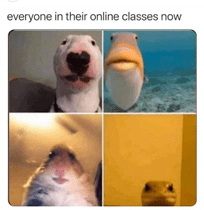
When I found out that UNC was moving to distance learning, I was a bit anxious about transitioning to an online classroom, having had experience in only one self-paced online classroom before. As I prepared for classes to return, this is how I envisioned Zoom classes would look moving forward…

Though, I have since learned that most people choose to keep their camera off (including me) which makes it a bit less distracting. Currently, we have only had three days of classes, but I’m happy to report that I have been surprisingly productive and have found a good system of taking notes during these online lectures. The use of breakout rooms has also “forced” me to work with people that I didn’t previously know, and it gives me the chance to talk with others in a less intimidating setting.

Other than classes, I have also continued working as a Research Assistant. I am lucky that I have the flexibility to work from home and access everything that I need to get my job done from a computer. Even before this crazy pandemic happened, I worked from home some days, so this new “transition” did not affect my work capabilities and I’m happy to say that my everyday schedule was not drastically changed. This is good news for me, considering that I’m not too fond of change. However, the past couple of weeks have not gone completely smoothly, considering that both my husband and I started to feel sick about a week ago. Luckily, it was just a cold for both us and we are finally on the mend, but just as scary, nonetheless.

Thinking forward, I am a bit disappointed that this virus has derailed our Easter plans to visit family in Michigan. But, if we continue to stay home and reduce our social contact during a time when the virus is actively spreading, I’m hoping that within a couple of months things will go back to normal. As we stay home, it’s important to think of the people that we are protecting. Even though I’m not currently in Michigan, I think of my 82-year-old grandma whose immune system was recently weakened due to a bout of bronchitis, putting her at a much higher risk for getting infected and experiencing severe symptoms. Though I am not actively protecting her, since I live in a different state, I know that the widespread public health measures that have been put into place might just save her life. To end on a positive note, as we try to get through this pandemic together, it’s important to be grateful for the little things, like being able to spend more time with those with whom we live and having more time each day (since we aren’t commuting). Sooner or later we will get through this together!

References

“Online Classes.” Reddit, 14 Mar. 2020, https://www.reddit.com/r/memes/comments/fi1yxd/online_classes/.

Soderbergh, Steven. Contagion. 2011, https://www.imdb.com/title/tt1598778/.

HPV Vaccination and Cervical Cancer Eradication

Though we may not realize, the human papillomavirus (HPV) is so widespread that the majority of men and women will be infected with some type of HPV infection in their lifetime. Though not all cases of HPV infection are the same, severe cases can lead to cervical, penile, anal, and throat cancers. Currently, cervical cancer continues to be one of the leading cancers among women. However, HPV can be prevented with an effective vaccine that is administered years before you are likely to be exposed to the virus. According to the Centers for Disease Control and Prevention (CDC), children between 11-12 years old should receive two doses of the HPV vaccine. I received this vaccine at a similar age, but had to receive three doses. It is great to see that vaccines are becoming more effective and require less doses (especially since this is one of the more painful vaccines that I received as child). Though, it is important to note that three doses are still needed if you receive the vaccine when you are 15 years old or older.

Unfortunately, the CDC reports that even if children and teenagers receive a HPV vaccine, many do not receive the recommended number of doses. Though this sounds alarming, new research suggests that receiving one dose may be just as effective as receiving multiple doses of the HPV vaccine. Specifically, researchers found that children who had received the HPV vaccine were significantly less likely to develop a HPV infection, compared with those who did not receive the vaccine. But, among those who did receive the vaccine the difference in risk of infection was not significantly different. That being said, the study did have its flaws. For example, it was not reported at what age the vaccine was received, which may have impacted its effectiveness, and the results were self-reported, which may reduce their accuracy. Therefore, though we have these promising results, it is best to continue with the current vaccine schedule until we have more research to prove that two or more doses are not necessary.

Though we see great success with the HPV vaccine, not all children are reached and getting vaccinated. Children that live in rural areas do not have the same access to this vaccine as those living in more urban areas. In addition, false information about the HPV vaccine, such as a supposed linked to autoimmune disease and depression, has made some families refuse this life-saving vaccine. In reality, the HPV is very safe and effective at protecting you from various strains of the virus! This is especially important because we live in a day and age where scientists believe that cervical cancer can be eliminated! If more children received the vaccine, this could be the reality sooner rather than later. According the World Health Organization (WHO), eradication of cervical cancer can be attained by 2030 if 90% of girls who are 15 year old and younger are vaccinated. This is great news! Even if we don’t meet this goal by 2030, every new vaccination is a step in the right direction. Now, it is our turn to spread the news about the safety and effectiveness of the HPV vaccine and encourage families to vaccinate their daughters AND sons. As someone who has received the vaccine, I am very grateful that my parents were proactive and made sure that I gained immunity to this virus. By supporting this important vaccine, we can make the world a healthier place for all!

References

Bakalar, Nicholas. “Even a Single Dose of HPV Vaccine May Provide Protection.” The New York Times, 2020, https://www.nytimes.com/2020/01/06/well/live/even-a-single-dose-of-hpv-vaccine-may-provide-protection.html?searchResultPosition=1.

Caplan, Arthur L., and Peter Hotez. “Cervical Cancer Can Be Eliminated. We Must Do More to Prevent This Deadly Disease.” CNN, 7 Sept. 2019, https://www.cnn.com/2019/09/07/opinions/cervical-cancer-can-be-eliminated-in-the-us/index.html.

Centers for Disease Control and Prevention. About HPV (Human Papillomavirus). 2019, https://www.cdc.gov/hpv/parents/about-hpv.html.

Centers for Disease Control and Prevention. Vaccinating Boys and Girls Against HPV. 2019, https://www.cdc.gov/hpv/parents/vaccine.html.

Hotez, Peter J. “You Are Unvaccinated and Got Sick. These Are Your Odds.” The New York Times, 9 Jan. 2020, https://www.nytimes.com/2020/01/09/opinion/vaccine-hesitancy.html?searchResultPosition=2.

The Consequences of Antibiotic Use in Farm Animals

Antibiotics are one of the greatest discoveries of the past century. They keep us healthy and have saved endless lives around the world. Unfortunately, over the years, we have treated antibiotics as an endless source of medicine, but this is far from the truth. Today, hundreds of thousands of individuals are dying from antibiotic resistant strains that were easily controlled by the same antibiotics in the past. Researchers from the United Nations believe that this number could reach 10 million by the year 2050! While, the Centers for Disease Control and Prevention report that in the United States, an individual dies from an antibiotic resistant “superbug” every 15 minutes! This is a terrifying new reality that we live in and it is something that we must be mindful of as we try to treat disease in the new century. This includes how we administer antibiotics to humans and animals. In fact, one of the main ways that we contribute to antibiotic resistance is by giving farm animals antibiotics.

In the United States, there is a common belief that to keep costs low and livestock healthy, we must use antibiotics. However, other countries such as Denmark have found ways to limit antibiotic use when raising pork. Danish farmers were able to reduce antibiotic use by improving the living conditions of the pigs, which reduced their risk of getting an infection that requires antibiotics. Though, it is important to note that stricter agriculture regulations and veterinarian practices were put into place that incentivized farmers to change their ways. Unfortunately, there are challenges in adopting these practices in the United States. American “pork industry officials” are convinced that pork prices would soar if we were to reduce antibiotics in a similar manner. Also, it appears that there is a lot of disagreement in the United States on the true impact of antibiotics in farm animal production. Some believe that the Danish farmer practices have not had any significant impact on overall public health so it is unnecessary to adopt it, while others think the opposite is true and that not enough is being done to stop antibiotic resistance in the United States. Based on the rise in antibiotic resistance that we have seen, I think that it is clear that we are not doing enough.

Though the United States has taken some steps to reduce antibiotic use when farming livestock and updated antibiotic use regulations, the changes have occurred slowly and some farmers continue to use questionable and dangerous antibiotic practices to make their pigs fatter. Luckily, we are seeing some positive changes in the restaurant industry, though it is hard to know if it is enough. For example, fast food chains such as Taco Bell, Wendy’s, and McDonald’s no longer use chickens that were given antibiotics that are medically important. I think this is an important step in the right direction, since these fast food chains are huge distributors of poultry and livestock. But, there are many other restaurants that have not committed to changing their practices and providing more antibiotic-free meat. However, “antibiotic-free” meat was not clearly defined, so the meat may still harbor antibiotic resistance. I was alarmed to learn that up until the last year, most chickens in the United States received “medically-important” antibiotics. This is completely mindboggling and terrifying. It is so important to raise awareness about antibiotic resistance and get more restaurants involved in the process. Though each one of us can do our part in reducing antibiotic resistance by taking antibiotics responsibly, I think widespread change is necessary, starting with those who raise and sell meat. If more restaurants commit to increasing the amount of antibiotic-free foods they provide, bacteria would have less opportunities to mutate and become resistant. We must continue to work together to take preventative measures to keep ourselves and our animals healthy, so that we can avoid using antibiotics whenever possible. The bottom-line is that all of us rely on antibiotics to stay alive, so it is our responsibility to make sure that future generations can rely on them too.

References

Centers for Disease Control and Prevention. Food and Food Animals. 2020, https://www.cdc.gov/drugresistance/food.html.

Cohen, Elizabeth, and Nadia Kounang. “Every 15 Minutes, Someone in the US Dies of a Drug-Resistant Superbug.” CNN, 2019, https://www.cnn.com/2019/11/13/health/superbug-amr-drug-resistant-cdc-2019-report/index.html.

Jacobs, Andrew. “Denmark Raises Antibiotic-Free Pigs. Why Can’t the U.S.?” The New York Times, 2019, https://www.nytimes.com/2019/12/06/health/pigs-antibiotics-denmark.html?searchResultPosition=5.

LaMotte, Sandee. “America’s Biggest Restaurant Chains Scored on Their Antibiotic Use.” CNN, 2019, https://www.cnn.com/2019/10/31/health/restaurant-antibiotic-report-card-wellness/index.html.

Polio Vaccination and Global Eradication?

After the development of the inactivated poliovirus vaccine (IPV) and the oral poliovirus vaccine (OPV), the United States was able to eliminate polio in 1979. In other words, in the past 40 years this virus has not been actively transmitted from person-to-person. Due to these two vaccines, a debilitating disease that can lead to paralysis, no longer threatens individuals living in the United States. I was lucky to be born during a time and place when/where the poliovirus was no longer an active threat, but I am also thankful that I received the required vaccination as an infant and child in case I’m ever in a situation where the poliovirus is present. Unfortunately, this disease has not been eliminated in all countries. Currently, Pakistan and Afghanistan are still dealing with reoccurring transmission of poliovirus. Though we have eliminated two strains of the poliovirus and continue to get closer to worldwide polio eradication, there are certain hurdles that must be overcome before it is completely eliminated.

Eradicating polio has been met with challenges due to the mistrust of vaccines in endemic countries. Some individuals believe that the vaccine will harm them and they are afraid of vaccinating their children. As a result, the disease persists and spreads. It is sad to think that misinformation can lead to widespread fear that can result in dire consequences for unvaccinated children and adults. Though at the same time, I think it is reasonable to not trust something that you don’t understand. Therefore, polio eradication cannot be attained unless we work with advocates from the affected countries to raise awareness around vaccine safety and its effectiveness. It is also important to consider that one dose of the vaccine is not enough. Both the Centers for Disease Control and Prevention and the World Health Organization recommend that children receive 4 doses of the poliovirus vaccine by the time that they are 6 years old. Thus, trust needs to be built and sustained in order for children to receive the needed dose for immunity.

Though we cannot eradiate polio without vaccination, some challenges have also arisen due to vaccine use. As mentioned before, two polio vaccines are currently available, the IPV and OPV. The IPV includes a virus that is no longer active, as its’ name suggests, and it is regularly used to prevent polio in countries that have been “polio-free” for an extended period of time, such as the United States. When polio is widespread in a population, the OPV, which includes a weakened version of the virus, is routinely used. This vaccine creates a more pronounced immune response in the gut which reduces transmission and since it is given orally, can be administered by trained volunteers, making it appealing in countries that frequently experience outbreaks. However, since OPV uses a weakened yet “live” virus, it has the ability to mutate into a dangerous new version of itself, leading to new cases of polio among individuals who have not been vaccinated. These mutated viruses have been named “circulating vaccine-derived polio virus”, or cVDPV, and they have been recently found in 20 countries, including Pakistan and Afghanistan. In addition, these countries now report more cases of paralysis due to these mutated polioviruses, compared to the wild poliovirus! Though I am a big advocate of vaccines, it is terrifying to think that a life-saving vaccine can be the source of new polio cases. On the bright-side, Pakistan and Afghanistan are responding to the increase in polio cases by working together on a widespread vaccination campaign where they plan on vaccinating 40 million children. Hearing about countries working together to increase vaccination rates, especially those that have been burdened with the disease for the longest time, gives me hope that soon we will eradicate another disease! Stay tuned.

References

Centers for Disease Control and Prevention. Polio Elimination in the U.S. 2019, https://www.cdc.gov/polio/what-is-polio/polio-us.html.

Centers for Disease Control and Prevention. Polio Vaccination: What Everyone Should Know. 2018, https://www.cdc.gov/vaccines/vpd/polio/public/index.html.

Centers for Disease Control and Prevention. What Is Polio? 2019, https://www.cdc.gov/polio/what-is-polio/index.htm.

Haider, Kamran. “Pakistan Begins Anti-Polio Drive After Virus Surge in 2019.” Bloomberg, 2019, https://www.bloomberg.com/news/articles/2019-12-16/pakistan-begins-anti-polio-drive-after-virus-surge-in-2019.

McNeil Jr., Donald G. “Two Strains of Polio Are Gone, but the End of the Disease Is Still Far Off.” The New York Times, 2019, https://www.nytimes.com/2019/10/23/health/polio-strain-eradication.html?searchResultPosition=1.

Polio Global Eradiation Iniciative. FAQ. http://polioeradication.org/polio-today/faq/. Accessed 22 Feb. 2020.

World Health Organization. Poliomyelitis. 2019, https://www.who.int/news-room/fact-sheets/detail/poliomyelitis.

World Health Organization. Oral Poliomyelitis Vaccine (OPV). 2012.

Mode of Delivery and the Microbiome

Our gut is colonized by a variety of good and bad microorganisms that make up our microbiome. The microbiome has been found to play a role in our digestion, immune response, and overall health. According to Dr. Cramer, the microbiome is not fully developed until an infant is three years old. Therefore, the microbiome that I have now as an adult, is not the same as the microbiome that I had as an infant. Mechanisms that determine the make-up of our microbiome include our mode of delivery, breastfeeding exposure and diet, and antibiotic use, to name a few. It is difficult not to get overwhelmed and anxious thinking about all the ways that we may be currently harming our microbiome or worsened it in the past.

To set infants up for the most protective microbiome, I think it’s important to think about their first exposure in life: birth. Mode of delivery is one of the ways that infants acquire their microbiome and researchers have seen differences in the microbiome of infants born via vaginal delivery vs. via a cesarean delivery. In a recent study, infants who were born vaginally had a gut microbiome that resembled their mom’s whereas infants who were born via cesarean section did not. In fact, their gut microbiome was more reflective of the bacteria that was present in the hospital and they had more bacteria that had antibiotic resistance. Though microbiome differences were not as apparent by the time the infants were a couple months old, I think these initial differences in microbiome make-up could have negative implications for the infant’s future health, as they may be less susceptible to potentially necessary antibiotic treatment. In addition, research has found that cesarean section infants have a greater risk of experiencing allergies, asthma, and inflammatory bowel disease which are all tied to their immune response. On the contrary, infants who are vaginally born experience less immune-related diseases. Though these findings are worrisome, I don’t think it is a good idea to scare parents into thinking that their infant will be “unhealthy” if they are born via cesarean section. Many infants who are born this way will probably go on to lead healthy lives, but it is still important to find ways to help these infants optimize their health.

It is important to research mode of delivery and its impact on the microbiome because current rates highlight that is a popular procedure. In 2018, about 32% of live births in the United States were delivered by a cesarean delivery. This is an alarmingly large percentage, considering that the World Health Organization (WHO) only recommends that 10-15% of pregnancies within a population result in a cesarean delivery. Though a cesarean-section may save the life of the mom and/or baby and be medically-necessary in certain situations is it important that this form of delivery is not abused. This is especially pertinent since microbiome research is continuously evolving and we do not fully understand the consequences. Though it would be costly and time-consuming, future studies should try to track infants over time to see how their microbiome evolves during infancy, at least until they are three years old. This longitudinal view could give us a better picture of how microbiome development impacts child and adult health. Hopefully, as research evolves, we will find a way to easily improve and maintain a healthy microbiome.

References

Centers for Disease Control and Prevention. Cesarean Delivery Rates. 2019, https://www.cdc.gov/nchs/pressroom/sosmap/cesarean_births/cesareans.htm.

Hopkins, Mark J., et al. “Characterisation of Intestinal Bacteria in Infant Stools Using Real-Time PCR and Northern Hybridisation Analyses.” FEMS Microbiology Ecology, vol. 54, no. 1, Oxford Academic, Sept. 2005, pp. 77–85, doi:10.1016/j.femsec.2005.03.001.

Hunt, Katie. Babies Born by C-Section Have Less of Mom’s Gut Bacteria. Here’s Why That’s Important – CNN. 2019, https://www.cnn.com/2019/09/18/health/babies-gut-microbiome-birth-vaginal-c-section-intl/index.html.

Koenig, Jeremy E., et al. “Succession of Microbial Consortia in the Developing Infant Gut Microbiome.” Proceedings of the National Academy of Sciences of the United States of America, vol. 108, no. SUPPL. 1, National Academy of Sciences, Mar. 2011, pp. 4578–85, doi:10.1073/pnas.1000081107.

Prakash, Satya, et al. “Gut Microbiota: Next Frontier in Understanding Human Health and Development of Biotherapeutics.” Biologics: Targets and Therapy, Dove Medical Press Ltd., July 2011, p. 71, doi:10.2147/btt.s19099.

Turroni, Francesca, et al. “The Infant Gut Microbiome as a Microbial Organ Influencing Host Well-Being.” Italian Journal of Pediatrics, vol. 46, no. 1, Dec. 2020, p. 16, doi:10.1186/s13052-020-0781-0.

World Health Organization. Caesarean Sections Should Only Be Performed When Medically Necessary. 2015, https://www.who.int/mediacentre/news/releases/2015/caesarean-sections/en/.

Influenza Update

Once again, the flu season is upon us and it is important to be aware of current influenza trends to reduce our risk of getting sick. The influenza virus is linked with symptoms such as a sore throat, congestion, cough, malaise, and fever. Since influenza is an enveloped virus, handwashing and using hand sanitizers will effectively eliminate this virus from our hands, therefore I cannot stress enough how important it is to be mindful of your hand hygiene throughout the fall and winter (and preferably all year round). Our other best defense against getting the flu is to get a flu vaccine. To maximize its effectiveness, The Centers for Disease Control and Prevention (CDC), along with the Advisory Committee on Immunization Practices (ACIP), recommend getting the flu vaccine by the end of October. Luckily, as of the end of January, about 173.3 million doses of the flu vaccine have been administered in the United States. I am thrilled that so many Americans are taking action to prevent the flu or to lessen its symptoms and are building herd immunity to protect those that are not able to get vaccinated against the flu.

Though it is difficult to predict which strains will be circulating in a given year, this year’s trivalent vaccine can protect you from three different strains of influenza, these include: “/Kansas/14/2017 (H3N2)-like virus”, “A/Brisbane/02/2018 (H1N1)pdm09-like virus”, and “B/Colorado/06/2017-like (Victoria lineage) virus”; while the quadrivalent vaccine will also protect you from the “B/Phuket/3073/2013-like (Yamagata lineage) virus”. Though it is too early to determine how effective this year’s vaccine truly is, CDC scientists report that at least some of the strains in this year’s vaccine (“influenza A(H1N1)pdm09 and B/Yamagata viruses”) are similar to the strains that are found in infected patients. Unfortunately, other strains that were found in patients are not as similar to the vaccine strains (“influenza B/Victoria and A(H3N2) viruses”). However, it is important to remember that even if the vaccine is not 100% effective (this is usually closer to “40-60%”), it can lessen the symptoms of an infection and protect you from grave consequences.

Currently, all U.S. states are reporting widespread or regional occurrences of influenza. The majority of individuals are being infected by influenza B strains, followed by influenza A strains. It saddens me to say that already 68 child deaths have been reported. Researchers have found that parents of children who have already received one flu vaccine may still be unsure about that vaccine, so it very important to educate families about the life-saving benefits of vaccination and provide positive messages. On the bright-side, though over 8,000 individuals with influenza cases have been hospitalized in the United States we have not reached an epidemic mortality level this year (6.7% vs. 7.2%); this highlights that even if the vaccine is not 100% perfect, it can still protect us from infection and death. In conclusion, if you are able to, make sure you get the flu vaccine every year to protect yourself and those around you!

References

Blümel, Johannes, et al. “Influenza Virus.” Transfusion Medicine and Hemotherapy, vol. 36, no. 1, Feb. 2009, pp. 32–39, doi:10.1159/000197314.

Centers for Disease Control and Prevention. Flu Symptoms & Diagnosis. 2019, https://www.cdc.gov/flu/symptoms/index.html.

Centers for Disease Control and Prevention. Frequently Asked Influenza (Flu) Questions: 2019-2020 Season. 2020, https://www.cdc.gov/flu/season/faq-flu-season-2019-2020.htm.

Centers for Disease Control and Prevention. “Seasonal Influenza Vaccine Supply & Distribution.” 2020, https://www.cdc.gov/flu/prevent/vaccine-supply-distribution.htm. Accessed 6 Feb. 2020.

Centers for Disease Control and Prevention. Weekly U.S. Influenza Surveillance Report. 2020, https://www.cdc.gov/flu/weekly/#S5.

Grohskopf, Lisa A., et al. “Prevention and Control of Seasonal Influenza with Vaccines: Recommendations of the Advisory Committee on Immunization Practices — United States, 2019–20 Influenza Season.” MMWR. Recommendations and Reports, vol. 68, no. 3, Aug. 2019, pp. 1–21, doi:10.15585/mmwr.rr6803a1.

Kim, Tae Hyong. “Seasonal Influenza and Vaccine Herd Effect.” Clinical and Experimental Vaccine Research, vol. 3, no. 2, Korean Vaccine Society (KAMJE), 2014, p. 128, doi:10.7774/cevr.2014.3.2.128.

Nekrasova, Ekaterina, et al. “Vaccine Hesitancy and Influenza Beliefs among Parents of Children Requiring a Second Dose of Influenza Vaccine in a Season: An American Academy of Pediatrics (AAP) Pediatric Research in Office Settings (PROS) Study.” Human Vaccines & Immunotherapeutics, Feb. 2020, pp. 1–8, doi:10.1080/21645515.2019.1707006.

Wakefield Article Consequences and Current Vaccination

In 1998, Wakefield et al. claimed that they had found in a link between the measles, mumps, and rubella (MMR) vaccine and autism (Eggertson). This was “concluded” with the use of a cohort consisting of 12 children who were suffering from “chronic enterocolitis and regressive developmental disorder” (Eggertson E199). The participating children were recruited from the “Royal Free Hospital and School of Medicine” where they were purposely selected for the case series study (Eggertson E1999). In addition, some of their families were involved in lawsuits with vaccine companies and their lawyers were providing money for the research (Eggertson). The study design, small sample size, and the unethical practices are all alarming aspects of this study (Rao and Andrade).

After its publication, other researchers conducted additional studies and it was soon clear that this proposed link did not exist (Rao and Andrade). Also, most authors that cited the original Wakefield publication (about 73%), did not agree with the findings (Suelzer et al.). Unfortunately, the damage had already been done and many parents no longer wanted to vaccinate their children (Eggertson). As a result, the number of measles outbreaks rose in the United Kingdom, United States, and Canada (Eggertson).

Today, to prevent and control outbreaks, the Centers for Disease Control and Prevention (CDC) work with various stakeholders and local organizations to identify any current measles cases and increase vaccination; this seems to be a successful approach since overall, many Americans are vaccinated (Centers for Disease Control and Prevention). Due to a recent increase in mumps outbreaks, the Advisory Committee on Immunization Practices (ACIP) now recommends receiving a third dose of the MMR vaccine (Marin et al.). Similarly, to control varicella outbreaks, a second dose of the vaccine was added to the vaccine schedule for children in 2006 (Lopez and Marin). Worldwide efforts to reduce measles and rubella infections are also currently underway. The World Health Organization (WHO) is working in different regions to eliminate measles and rubella infections by the year 2020 through their Global Vaccine Action Plan (World Health Organization). Hopefully, worldwide efforts to increase vaccination rates will lead to fewer and fewer outbreaks, making these diseases a relic of the past.

References:

Centers for Disease Control and Prevention. Measles Elimination in the U.S. 2019, https://www.cdc.gov/measles/elimination.html.

Eggertson, Laura. “Lancet Retracts 12-Year-Old Article Linking Autism to MMR Vaccines.” CMAJ : Canadian Medical Association Journal = Journal de l’Association Medicale Canadienne, vol. 182, no. 4, 9 Mar. 2010, doi:10.1503/cmaj.109-3179.

Lopez, Adriana, and Mona Marin. Strategies for the Control and Investigation of Varicella Outbreaks Manual, 2008. 2018, https://www.cdc.gov/chickenpox/outbreaks/manual.html.

Marin, Mona, et al. “Recommendation of the Advisory Committee on Immunization Practices for Use of a Third Dose of Mumps Virus–Containing Vaccine in Persons at Increased Risk for Mumps during an Outbreak.” MMWR. Morbidity and Mortality Weekly Report, vol. 67, no. 1, Jan. 2018, pp. 33–38, doi:10.15585/mmwr.mm6701a7.

Rao, T. S. Sathyanarayan., and Chittaranjan Andrade. “The MMR Vaccine and Autism: Sensation, Refutation, Retraction, and Fraud.” Indian Journal of Psychiatry, vol. 53, no. 2, Apr. 2011, pp. 95–96, doi:10.4103/0019-5545.82529.

Suelzer, Elizabeth M., et al. “Assessment of Citations of the Retracted Article by Wakefield et Al with Fraudulent Claims of an Association between Vaccination and Autism.” JAMA Network Open, vol. 2, no. 11, NLM (Medline), Nov. 2019, p. e1915552, doi:10.1001/jamanetworkopen.2019.15552.

World Health Organization. Measles. 2020, https://www.who.int/immunization/diseases/measles/en/.